Mathias
Casiulis
Who am I?
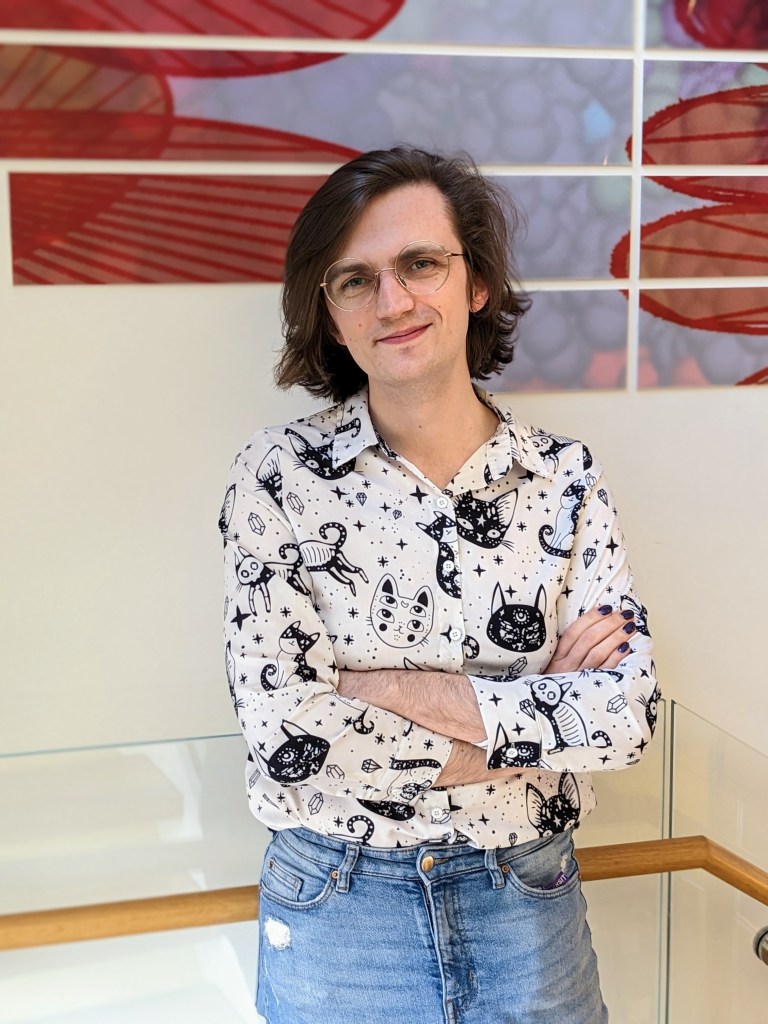
I am currently a Senior Research Scientist (postdoctoral researcher) at New York University (NYU), affiliated with both the Center for Soft Matter Research (CSMR), Department of Physics, and the Simons Center for Computational Physical Chemistry, Department of Chemistry. My main advisor is Pr. Stefano Martiniani, at the Martiniani lab.
My interests lie at the meeting point of computational physics and applied mathematics of soft matter. In particular, my recent work has focused on the jamming transition of soft and hard spheres, active matter, functional disordered materials, and entropy measurements beyond equilibrium.
Click here for my full CV.
You can read about my research below, and about my OUTREACH and TEACHING activities on the dedicated pages. If you are here because you want to contact me, please use the CONTACT FORM. Finally, if you’re wondering how my last name is written, you’re not the only one, read about it at C OR K?
RECENT RESEARCH
Broadly speaking, my research has so far focused on the computational study of many-body, dynamical, and complex systems, at the interface between theoretical physics and applied mathematics. This has brought me to work on seemingly very different topics that in fact require similar tools and ideas, from active matter and robophysics to jamming or disordered materials for optics. My interests, old and current, as well as my scientific production are described more at-length on the RESEARCH page, and you can read about the broad themes of my published research in the articles below.
-
Active matter with a twist
One of my oldest interests lies in systems that are able to self-propel, like animals or vehicles. Over the years, I have focused on three separate themes that fall under that broad umbrella: Hamiltonian Flocks, Self-Navigating Particles, and Force-Aligning Active Particles.… Read more
-
Jamming and the energy landscape
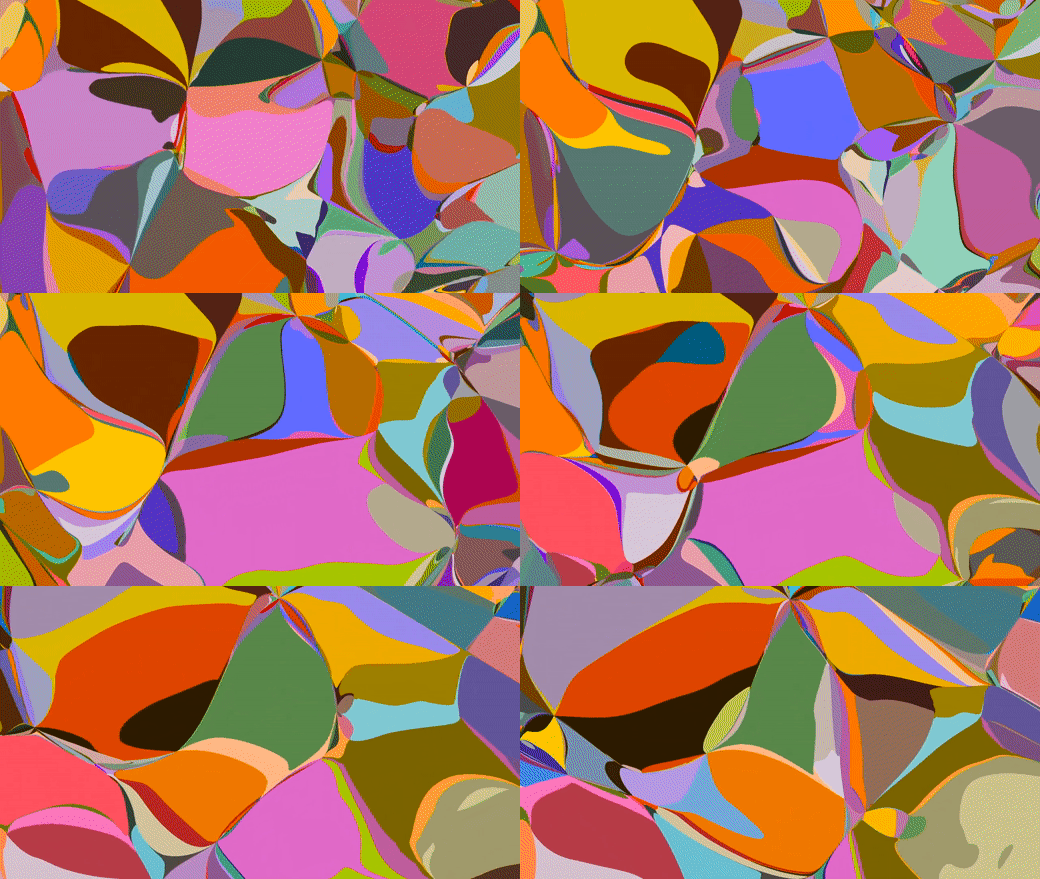
Take a bunch of sand grains, pour them into a jar, tap them, and you will get a jammed packing of sand grains, an ensemble of (mostly) repulsive particles that develop an emergent rigidity because of the structure of their contacts.… Read more
-

Correlated disorder and disordered materials
Draw a bunch of points randomly on a page. Most likely, what you drew is a set of points that are not quite statistically independent, yet not very ordered: this is an example of correlated disorder. Correlated disordered structures have been… Read more
 Mathias Casiulis